The scan shouldn’t be the risk. Radiation, toxic dyes, and five-figure bills—the hidden toll of legacy imaging
- Diagnosis that harms is not diagnosis. Radiation, contrast, and cost—yesterday’s machines, today’s damage.
- When the cure becomes collateral. Deadly doses, dye-driven injuries, $10K scans—the price of not listening
Legacy Imaging: Dangerous Doses & Delays
- CT’s hidden cancer tab. Annual U.S. CT use could generate 100 K future cancers, accounting for ~5 % of new cases National Institutes of Health (NIH)Home.
- Contrast dye risks. Iodinated agents can trigger nephropathy, thyroid dysfunction, and severe hypersensitivity .
- Wait for symptoms, pay later. Patients often delay ER visits > 12 hours, doubling complication risk while CT/MRI slots fill
- Dose stacks—repeat imaging means cumulative danger. Each additional CT adds to lifetime dose; multiple exposures link to higher leukaemia and solid‑tumour incidenc.
Radiation’s Silent Reaper
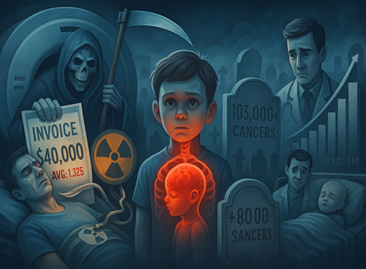
- 93 M scans → ~103 K future cancers. U.S. CT volume in 2023 is projected to seed ≈5% of all future cancers—about 103,000 cases across adults and children. National Institutes of Health (NIH)Institute of Cancer Research
- Kids pay the highest price. Just 2–3 head CTs (~60 mGy) can triple the risk of brain tumors and leukemia—risk rises as dose accumulates. AuntMinnie
- Radiation stacks. Each additional CT adds to lifetime exposure; repeated scans are tied to higher rates of leukemia and solid tumors. BioMed Central
- Contrast can injure kidneys. Iodinated contrast causes AKI in ≈11–40% of high-risk patients; severe cases may require dialysis or lead to death. concussionmanagementofny.comPMC
Costly Panic & Collateral Harm
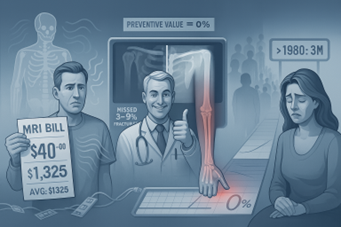
- Five-figure scans, ~2% cancer yield. Self-pay MRIs run $400–$12,000; full-body scans $1K–$4.5K yet detect cancer in only ~2.2% of users. GoodRxAxios
- False-positive frenzy. Lung LDCT programs report 24–49% baseline false positives; ~96% of flagged nodules prove benign. Cancer.gov
- 110 dB-class noise + claustrophobia → sedation. MRI acoustic peaks can exceed 110–120 dB; up to 14% of patients require sedation—adding risk, cost, and delays. American Journal of RoentgenologyPubMed
- Missed injuries despite the scan. Standard radiographs still miss 3–9% of extremity fractures, sending patients home undiagnosed and back for repeat care. PMC